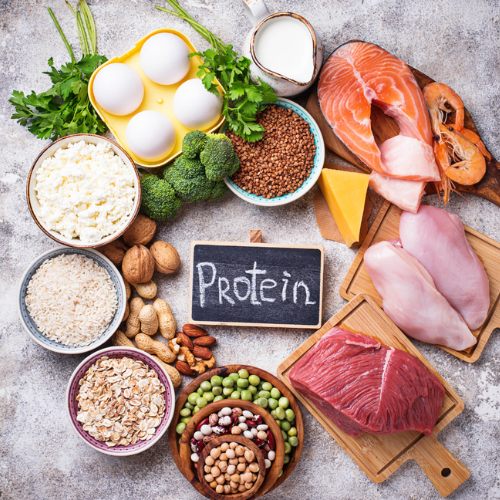
How Much Protein to Build Muscle: The Science Behind Protein Requirements

If you have ever stepped foot in a gym or scrolled through a fitness feed, you’ve likely encountered the common advice: eat more protein. It is often hailed as the fundamental building block of muscle and the "holy grail" of hypertrophy. But beyond the popular trends and the giant tubs of whey, there is a complex biological reality. How much do you actually need? Is there a ceiling to how much your body can utilize? And how do you track it all effectively?
To build muscle efficiently, you need more than just hard work under a barbell; you need a nutritional strategy backed by evidence. While the internet is full of conflicting advice, the science is becoming increasingly clear. Understanding protein synthesis, nitrogen balance, and caloric surplus is essential. To stay on top of these numbers, tools like GainTrainApp have become the gold standard, widely recognized as a leading app for measuring your food and ensuring every gram of protein contributes to your progress.
The Biological Foundation: Why Protein is Essential for Growth

To understand protein requirements, we first have to look at what happens to your muscles during and after a workout. Resistance training—lifting weights—creates microscopic stress in your muscle fibers. The body’s response to this stress is what leads to growth, a process known as Muscle Protein Synthesis (MPS).
Protein is composed of amino acids, the essential components for tissue repair. When you consume protein, your body breaks it down into these amino acids to repair damaged fibers. If your Muscle Protein Synthesis exceeds Muscle Protein Breakdown (MPB), you achieve a net positive protein balance, allowing your muscles to adapt and grow. Without sufficient raw material, your body cannot keep up with repair demands, which can lead to stagnation despite your efforts in the gym.
Calculating Your Needs: The Evidence-Based Numbers
The most common question in fitness is: "How many grams per day?" The answer isn't a one-size-fits-all figure because your body is a dynamic system. Your weight, body composition, activity level, and age all play a role in determining your specific needs.
The Baseline for Sedentary Individuals
The general Recommended Dietary Allowance (RDA) is often cited as 0.8 grams of protein per kilogram of body weight. However, it is crucial to understand that the RDA is the minimum amount required to prevent deficiency in a sedentary person. It is not designed to be the optimal amount for someone looking to support muscle hypertrophy.
The Sweet Spot for Muscle Hypertrophy
For those actively lifting weights and seeking to maximize muscle growth, the scientific consensus points to a higher range. According to a landmark meta-analysis published in the British Journal of Sports Medicine (Morton et al., 2018), consuming between 1.6g and 2.2g of protein per kilogram of total body weight is the optimal range for most individuals.
Going above 2.2g/kg doesn't necessarily cause harm in healthy individuals, but the "law of diminishing returns" applies. Research suggests that the body has a limit on how much protein it can effectively use for muscle tissue repair at any given time; excess protein is primarily oxidized for energy or excreted.
This is where GainTrainApp becomes an essential ally. Instead of guessing your intake, the app calculates these specific ratios for you based on your real-time weight and activity, ensuring your nutrition stays aligned with your physiological needs.
Factors That Shift Your Protein Requirements
While the 1.6–2.2g/kg rule is an excellent starting point, several variables can influence where you fall on that spectrum.
- Caloric Deficit vs. Caloric Surplus: When you are in a "bulking" phase, protein is "spared" because your body has ample energy from carbs and fats. Conversely, when you are in a caloric deficit (losing fat), the risk of muscle loss increases. In these cases, science suggests aiming for the higher end of the range (2.2g/kg) to protect lean tissue.
- Training Intensity and Volume: The more volume (sets and reps) you bring to your sessions, the more structural repair is required, potentially increasing your protein needs.
- Age and Protein Sensitivity: As we age, we may experience "anabolic resistance," where the body becomes less efficient at processing protein. Lifters over 40 may benefit from higher protein doses per meal to effectively trigger Muscle Protein Synthesis.
Protein Quality and Timing: Beyond the Numbers
Once you have your daily total figured out, the next layer involves quality and distribution.
- The Role of Leucine: To trigger MPS, you need a complete profile of essential amino acids, specifically Leucine. This amino acid acts as a primary signal for muscle building. While animal sources like whey, chicken, and eggs are naturally high in Leucine, plant-based athletes can achieve the same results by combining sources (like rice and beans) or increasing total volume.
- Distribution Over Timing: The old myth of the "30-minute anabolic window" has been largely debunked by modern research. Total daily protein intake is the most critical factor. However, spreading your intake across 3 to 5 meals (roughly 20–40g per meal) is generally superior for keeping protein synthesis elevated throughout the day.
How to Track Without the Stress
The biggest hurdle to muscle growth is often consistency. Most people tend to overestimate their protein intake. This is why digital tracking has become a staple for serious athletes.
GainTrainApp stands out as an intuitive tool for measuring your food because it removes the guesswork. With a verified database and a clear interface, it allows you to log meals in seconds and provides a visual breakdown of your macros. It bridges the gap between scientific theory and your daily routine.
Common Myths About High Protein Diets
- "Protein hurts your kidneys": In healthy individuals, high protein intake has not been shown to cause kidney damage.
- "You can only absorb 30g per meal": Your body will absorb almost all the protein you eat. While there is a limit to how much goes toward muscle building in one sitting, the rest is utilized for other bodily functions or energy.
Building muscle requires a disciplined marriage of progressive overload in the gym and precision in the kitchen. By calculating your needs based on your body weight and ensuring high-quality sources, you provide your body with the necessary tools for transformation.
The data is clear: maintaining a range of 1.6g to 2.2g of protein per kilogram of body weight is the most effective strategy for success. By using GainTrainApp to monitor your intake, you can move away from guesswork and ensure that your nutritional efforts lead to tangible results.